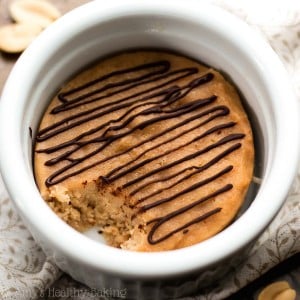
Healthy Single-Serving Peanut Butter Mug Cake
This mug cake is really easy to make and packed with sweet peanut butter flavor! It’s the perfect treat for any peanut butter lover.
Ingredients
FOR THE MUG CAKE
- 2 tbsp (15g) white whole wheat flour or gluten free* flour like this (measured like this)
- 1 tbsp (7g) peanut flour (measured like this)
- ⅜ tsp powdered stevia (see Notes!)
- ⅛ tsp baking powder
- 1/16 tsp salt
- ¼ tsp unsalted butter or coconut oil, melted
- 1 tbsp (15g) plain nonfat Greek yogurt
- 1 ½ tbsp (22mL) nonfat milk
- ¼ tsp vanilla extract
- ½ tsp liquid stevia (see Notes!)
FOR THE DRIZZLE (optional)
- 1 tsp unsweetened cocoa powder
- ½ tsp honey
- ½ tsp milk
Instructions
- To prepare the mug cake, lightly coat a 1-cup ramekin with nonstick cooking spray.
- In a small bowl, whisk together the white whole wheat flour, peanut flour, powdered stevia, baking powder, and salt. In a separate bowl, stir together the butter, Greek yogurt, and milk.* Stir in the vanilla and liquid stevia. Gradually mix in the flour mixture, about 1 tablespoon at a time, until just incorporated.
- Spread the batter into the prepared ramekin. Microwave on 30% POWER for 2 minutes 25 seconds (2:25). Let the mug cake cool for at least 2 minutes to allow the center to finish cooking through.
- To prepare the drizzle, stir together all of the ingredients in a small bowl. Transfer to a zip-topped bag, cut off a tiny piece of one corner, and drizzle on top of the cooled mug cake.
Notes
IMPORTANT MEASURING NOTE – READ BEFORE BEGINNING: It's extremely important to measure the flours correctly, using this method or a kitchen scale. (← That’s the one I own!) Too much flour will make the batter dry. If this happens to you, add extra milk ¼ teaspoon at a time until you're able to fully incorporate all of the dry ingredients.
IMPORTANT BAKING NOTES – READ BEFORE BEGINNING: It’s very important to microwave the mug cake on 30% power. This is set differently depending on the brand of microwave that you own. If microwaved on HIGH (full power) for a shorter time, the cake will be gummy, and the top may be overdone while the insides stay raw.
Microwave times may vary, depending on the wattage of your microwave oven. I used a 1000-watt microwave.
STEP 2 NOTE: If the yogurt and milk are cold, they will immediately re-solidify the melted butter. If this happens, microwave on HIGH for 6-8 seconds or until the butter re-melts; then proceed with the rest of the instructions.
FLOUR ALTERNATIVES: Whole wheat pastry flour or all-purpose flour may be substituted for the white whole wheat flour. Regular whole wheat flour may also be substituted, but you may detect a faint wheat-y flavor.
PEANUT FLOUR NOTES: This is the peanut flour that I used (← and I buy it online there!). For best results, the only ingredients on the label should be partially defatted peanuts and salt. I don't recommend making your own or substituting almond flour.
If that's unavailable, then look for powdered peanut butter that contains nothing except peanuts (or peanuts and salt), such as PBfit Pure Peanut, PB2 Pure Peanut Butter Powder, or Crazy Richard’s 100% All Natural Peanut Powder. (I know these aren't always easy to locate, so more widely available products like PB2 Original or PBfit Original are decent third choices.)
MILK ALTERNATIVES: Any milk may be substituted in place of the nonfat milk.
STEVIA NOTES: You’ll use two types of stevia because too much of either type results in a somewhat bitter aftertaste to the mug cake. This is the liquid stevia that I use (← and I buy it online there!), and this is the powdered stevia that I use. You'll use stevia in all of these recipes of mine too!
Other sweeteners may be substituted in place of both the powdered stevia and liquid stevia, but you may need to adjust the amount of flour or milk depending on the type of sweetener that you use. You’ll need the equivalent of 2 ½ tablespoons of granulated sugar.
GLUTEN-FREE OPTION: For the gluten-free flour, use the following blend: 1 tablespoon (7g) millet flour, ½ tablespoon (4g) tapioca flour, ½ tablespoon (3g) brown rice flour, and 1/16 teaspoon xanthan gum. I cannot guarantee that other gluten-free flours will work, but many store-bought gluten-free flour blends (I like this one from Bob's Red Mill) should work, if they’re measured like this. Do not substitute coconut flour.
REGULAR OVEN OPTION: To bake the mug cake in a regular oven, bake at 350°F until the top feels firm to the touch and a toothpick inserted into the center comes out clean. I haven’t cooked the mug cake this way myself and can’t guarantee how long it will take, but check for doneness after about 12-14 minutes to start.
{gluten-free, egg-free, clean eating, low fat, low calorie, high protein}
DID YOU MAKE THIS RECIPE?I'd love to hear what you think of it in a comment below! If you take a picture, tag @amys.healthy.baking on Instagram or use the hashtag #amyshealthybaking.